
Zero Party Data: Complete Guide for E-commerce Brands

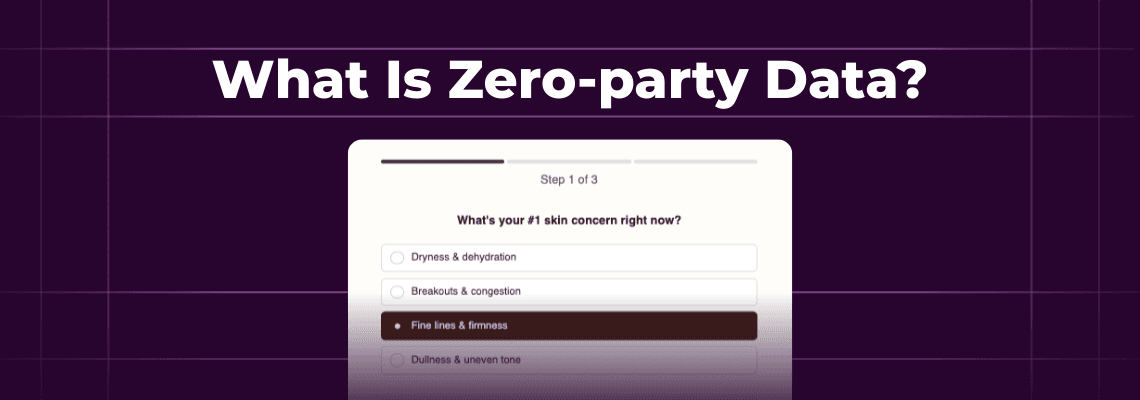
Zero party data has emerged into a common topic in CRM and lifecycle strategies. Some teams are already collecting it in some form, but are less clear on how to turn it into better journeys, stronger segmentation, and more revenue.
This guide focuses on four things:
What zero party data actually is (and how it differs from other data types)
The benefits of zero party data How to use it in practice across your lifecycle and campaigns
How to reduce friction so customers actually submit it
Inside this page
Share this
Summarize with AI
Key Takeaways
Zero party data is what customers tell you directly — preferences, goals, and context — collected through surveys, quizzes, and in-email forms. It's different from first-party behavioral data and third-party purchased data.
It drives real revenue, not just "nice" personalization. Segmented campaigns generate up to 760% more revenue (DMA), and companies that personalize well see 10-15% revenue uplift (McKinsey).
The biggest barrier is completion, not collection. Every step between question and answer causes drop-off. In-email forms cut the steps down and can nearly triple response rates versus linked surveys.
Start small: 1-3 high-leverage questions per touchpoint at natural journey moments (welcome, post-purchase, replenishment, winback). Longer surveys can come later through progressive profiling.
Connect responses to your CRM and close the loop. Zero party data only creates value when it drives segments, flow logic, and personalized campaigns — and when customers see the experience improve after sharing.
What is zero party data?
Zero party data is information a customer shares with you deliberately, usually in response to questions you ask.
Typical examples:
"My main skin concern is hyperpigmentation."
"My dog is a 3-year-old Labrador with a sensitive stomach."
"I'm most interested in plant-based proteins."
Analysts at Forrester, who popularised the term, describe it as data that a customer intentionally and proactively shares with a brand in exchange for a better experience. It is not inferred from behaviour or bought from third parties.
Common types of zero party data for e-commerce:
Preferences: skin type, flavours, fabric sensitivities, price comfort Goals: clearer skin, better sleep, more energy, more sustainable choices Context: who they are buying for, pet breed and age, life stage Communication channels they care about, product categories they want to see
You typically collect this through quizzes, short forms, in-email questions, and preference updates, and save it on the customer profile in your CRM.
Zero vs first vs third party data
Zero party data often gets mixed up with first-party data. A simple way to keep them separate:
Data type: Zero party How you get it: Customer tells you directly Examples: Skin concern, dietary needs, pet breed Notes: Explicit, contextual, permission-based
Data type: First party How you get it: You observe behaviour on your own channels Examples: Opens, clicks, purchases, browsing history Notes: Essential for understanding what people do
Data type: Third party How you get it: You buy or borrow it from another source Examples: Brokered audiences, third-party cookies Notes: Increasingly restricted and less transparent
In practice, the strongest CRM programs combine:
First-party data to understand behaviour Zero party data to understand reasons, preferences, and constraints
Benefits of zero party data: customer experience and revenue
Zero party data is not only a compliance or "nice to have" topic. Used well, it changes what customers see and how much value you get from each relationship.
Customer experience benefits
More relevant content and offers: When recommendations and campaigns reflect stated skin concerns, pet needs, or health goals, emails feel less random and more like a service.
Less friction and guesswork: Customers do not have to keep telling you the same things, and they spend less time digging through products that clearly are not for them.
More control and trust: Clear questions and preference options show how you will use the data, which supports trust and gives people a simple way to steer what they receive.
Better perception of the brand: Research from Epsilon found that 80% of consumers are more likely to make a purchase when brands offer personalised experiences, and 90% find personalisation appealing.
Revenue and LTV benefits
Higher campaign and flow revenue: Segmented and targeted email campaigns consistently outperform broad sends. DMA has reported that segmented campaigns can generate up to 760% more revenue than non segmented campaigns, mostly by sending fewer but more relevant messages. Similar numbers were seen using interactive emails, allowing customers to fill out surveys directly inside their inbox.
Improved conversion rates and basket sizes: When recommendations fit the context a customer has shared, they are more likely to convert and to add complementary products that make sense for their situation.
Stronger retention and LTV: McKinsey analysis suggests companies that excel at personalisation can see 10–15% revenue uplift and higher customer loyalty over time. Zero party data gives CRM teams the inputs they need to move closer to that level of personalisation in email and lifecycle programs. In addition, the expectation of receiving personalized information is at 71%.
More efficient paid media: Segments based on clear, declared preferences and goals make better seed audiences for lookalikes than broad "all purchasers" lists, which can improve acquisition efficiency.
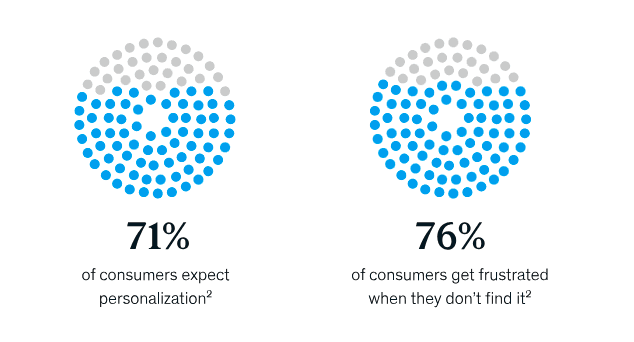
Source: McKinsey
In practice, these benefits show up as better engagement, more repeat purchases, and a higher share of revenue coming from existing customers, without a significant increase in send volume.
How to actually use zero party data
Many brands already collect some zero party data, then struggle with "now what?".
The value comes from plugging it into specific decisions.
Here are the main ways e-commerce teams use it.
Tailoring welcome flows
Example for skincare:
Ask: "What is your main skin concern?" and "How would you describe your skin type?"
Use these answers to:
Branch the welcome flow into different storylines (acne, sensitivity, aging, pigmentation)
Change which products are featured first
Swap educational content (routines, ingredients to focus on or avoid)
Improving recommendations and merchandising
Example for pet brands:
Ask: "What breed of dog do you own?", "Does your pet have any allergies?"
Use these answers to:
Filter out products that are not suitable
Highlight products other similar pets do well with
Adjust replenishment and reminder timings
Designing more relevant campaigns
Example for supplements:
Ask: "What is your main health goal right now?" (sleep, stress, energy, gut health).
Use these answers to:
Build segments by goal
Swap parts of campaigns to match that goal
Decide who should receive specific launches or bundles
Making lifecycle flows feel less generic
Zero party data can shape:
Post-purchase sequences that speak to why someone bought
Winback flows that address the right objections
VIP and loyalty communication that reflects what they value
Customers experience this as emails that are more useful and relevant, with fewer messages that feel random.
Why zero party data matters now
There are several reasons CRM and marketing teams are giving this more attention.
Privacy and data limitations
Regulation and platform changes mean you have less reliable third-party and cross-site behavioural data. Google's Privacy Sandbox, cookie deprecation, and similar shifts reduce the amount of granular targeting you can do based purely on tracking.
Zero party data is gathered on your own channels, under your own consent framework, from people who know what they are sharing.
Expectations for relevance
Customers have become used to digital products that respond to their behaviour. When they tell a brand "I have sensitive skin" or "my dog has allergies" and then keep receiving unsuitable suggestions, it feels careless.
Zero party data gives you a straightforward way to avoid obvious mismatches and to focus on what people said they care about.
Pressure to get more value from the list
It is usually cheaper to increase revenue per subscriber than to keep raising acquisition budgets. A well-used set of zero party data fields can:
Improve conversion rates in existing flows
Increase the performance of campaigns without sending more emails
Help you identify the segments that justify more investment
The main challenge: people not completing surveys and quizzes
Most teams have ideas for questions they would like to ask. The real bottleneck is completion.
A typical "linked-out" survey or quiz flow looks like this:
Customer opens the email
Clicks a link or button
Waits for a new tab to open
Waits for the page to load
Sees the survey or quiz
Reads and completes it
Submits
There is potential drop-off at every step. Surveys and form providers often report much higher open and click rates than completed responses once people are sent to a separate page.
Common friction points:
Slow page loads, especially on mobile
Distractions once someone leaves the inbox
Long or complex surveys
Unclear explanation of why you are asking
This is why many brands see a large gap between the size of their list and the size of segments that have useful zero party data attached.
How e-commerce brands collect zero party data today
You can group most approaches into four patterns.
On-site quizzes and product finders
On-site quizzes are effective for guiding browsing visitors and capturing detailed preferences.
Strengths:
Help people choose products with confidence
Can collect several data points in one experience
Feel natural during discovery
Limitations:
Mostly help when someone is already on the site
Data sometimes stays in the quiz tool instead of the CRM
Can be heavy to maintain if they are not owned by the CRM team
Preference centres
Preference centres allow subscribers to adjust:
Topics of interest Frequency (for example, promotions vs product education)
Sometimes product categories or formats
Strengths:
Good safety valve to prevent unsubscribes
A natural place to store more static preferences
Limitations:
Usually buried in the footer or unsubscribe flow
Often only used when someone is already unhappy
Still send people out of the email to a page
Post-purchase and NPS surveys
These are sent after an order or milestone and ask about:
Satisfaction Reasons for buying
How they discovered you
Suggestions and feedback
Strengths:
Great timing: you have just delivered value
Useful for product and experience decisions
Provide both quantitative and qualitative signals
Limitations:
Often link out to a survey on the web
Completion depends heavily on friction and timing
Sometimes sit in tools that are loosely integrated with CRM
In-email forms and interactive elements
Instead of sending people to a landing page, in-email forms and interactive elements let subscribers answer directly inside the email.
In practice this looks like:
Short forms embedded in a welcome or post-purchase email
A few questions that can be answered with a tap or a quick input
Quizzes that start and finish in the inbox for many recipients
Tools such as Kinetic make these experiences possible in major inboxes like Gmail and Apple Mail and provide a landing page fallback for other clients. All responses are automatically saved as custom fields in Klaviyo.
The key benefit is fewer steps between question and answer. For example, Dr. Emi Arpa Skin tested a standard email linking to a web form against an interactive, in-email form powered by Kinetic. With the same audience and questions, the in-email version increased response rate by 188%.

(read the full case study)
Best practices for collecting zero party data
Choose a small set of high-leverage questions
Start with questions that clearly change what happens next. For example:
Skincare: "What is your main skin concern?" and "How would you describe your skin type?"
Supplements: "What is your main health goal right now?"
Pet brands: pet type, breed, age, size, and any allergies
Questions like these drive:
Which products to feature
What education content to send
Which flows or branches to use
Lower-priority questions can come later through progressive profiling.
Keep each interaction short
Aim for:
One to three questions per touchpoint
Simple answer formats where possible (images to click on, short text)
A series of small asks, instead of one long survey
This keeps completion rates high and makes customers more willing to respond again in future.
Ask at natural points in the journey
Zero party data works best when the questions match the moment.
Good examples:
Welcome flow: basic preferences and goals
First purchase: why they chose the product, who they are buying for
Replenishment: whether they finished on time or earlier/later than expected
Winback: why they have not ordered again, what would make them return
If a question does not clearly help the customer get more from the product or content at that moment, consider dropping or delaying it.
Explain the value clearly
People are more likely to answer if they understand the benefit.
For example:
"Tell us about your skin so we can skip products that are a bad fit."
"Share your dog's details so we only recommend suitable food and treats."
"Choose your main goal so your emails focus on what matters to you."
Make the value explanation as visible as the question itself.
Connect responses to your CRM
Zero party data is most useful when:
You actually use it to improve customer experiences
Each answer maps to a clear field (for example, skin_concern, pet_allergy, goal)
Your ESP or CDP can use those fields for segments, filters, and flow logic
Data stays in sync across tools over time
Many form and quiz tools, including in-email solutions such as Kinetic, allow you to connect responses directly to platforms like Klaviyo. This lets you build segments and dynamic content based on those properties without exporting and importing lists.
Close the loop
Customers notice when you act on what they told you.
On the web, this often means:
Finishing a quiz with a clear product or routine recommendation
Showing how their answers shaped that recommendation
In email, you can do something similar:
Follow up an in-email question about skin concern with a routine tailored to that concern
Use an interactive email to both collect the information and immediately present relevant products or content based on the answer, all within the inbox
Over time, this builds trust and makes people more willing to share additional information.
How zero party data improves journeys and performance
To summarise how this looks across your lifecycle:
Welcome: different tracks based on concern, goal, or use case, instead of one generic story.
Post-purchase: follow-up content and cross-sells that make sense for the reason someone bought.
Replenishment: reminders and offers timed to how people actually use the product, not just a fixed schedule.
Winback: messages that address the main reasons lapsed customers give you, rather than a single discount email.
Campaigns: promotions and content that vary by preference, category interest, or goal, so fewer people receive irrelevant emails.
The customer-facing benefits are simple: emails feel more tailored, more useful, and less repetitive. On the business side, this usually shows up as higher click and conversion rates, lower unsubscribe rates, and better performance from the same number of sends.
FAQs
Is zero party data GDPR-compliant?
It aligns well with GDPR principles when collected with clear consent and purpose. You still need to explain what you collect, why, and how long you keep it, and honour access and deletion requests.
Is data from a quiz zero party or first party?
If the quiz is on your channels and customers are directly answering questions, the answers are usually considered zero party data. How they move through the quiz (clicks, page views) would be first-party behaviour data.
How often should I ask for zero party data?
It is usually better to ask small, focused questions at key lifecycle moments than to send long surveys. A practical starting point is to add one short question to each major flow (welcome, post-purchase, replenishment, winback) and a small number of campaigns.
What is the most common mistake brands make with zero party data?
Either letting it sit unused in a separate tool, or asking for too much at once with no clear benefit for the customer. The most effective programs treat it as part of everyday flow and campaign design, not as a one-off project.