
Best Klaviyo Integrations for Ecommerce Brands

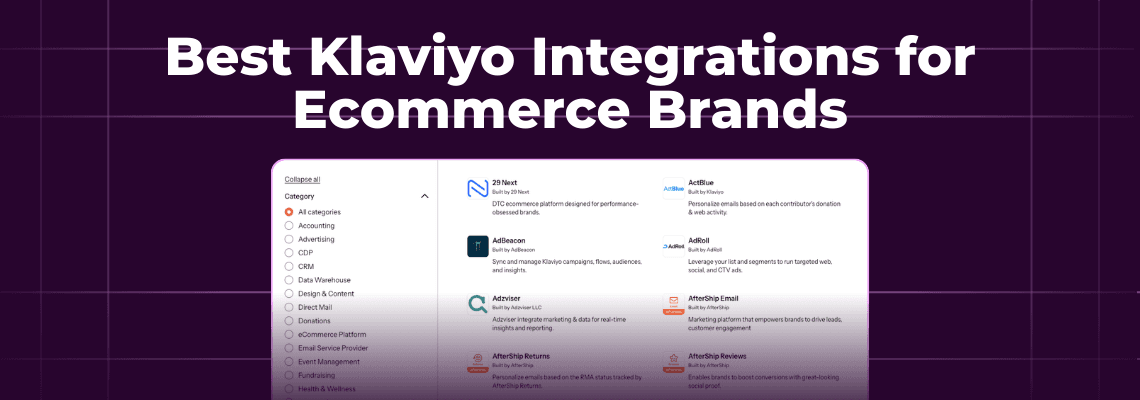
Klaviyo is powerful on its own. But connect it to the rest of your tech stack and you unlock campaigns that convert better.
With over 350 pre-built integrations in the Klaviyo App Marketplace, you can sync data from review platforms, loyalty programs, subscription tools, shipping trackers, and more. Each integration feeds customer data back into Klaviyo. You can build smarter segments. Personalize flows based on actions across platforms. Get higher engagement and better retention from the same list.
This guide covers the integrations worth connecting across key categories for ecommerce brands. What each tool does, why the integration matters, and which brands should use them.
Inside this page
Share this
Summarize with AI
Key Takeaways
Klaviyo offers 350+ pre-built integrations that sync customer data from reviews, loyalty, subscriptions, shipping, and other tools directly into email profiles
Core integrations to prioritize: ecommerce platform (Shopify/WooCommerce), reviews (Judge.me/Yotpo), loyalty (Smile.io/LoyaltyLion), subscriptions (Recharge/Skio), and shipping (AfterShip)
Interactive email forms (Kinetic) get 3x higher response rates than landing page forms because customers respond without leaving their inbox
Start with 3-5 integrations that solve specific problems rather than connecting every available app
What are Klaviyo integrations?
Klaviyo integrations connect your email platform to other tools in your tech stack. When you integrate Shopify, Recharge, Kinetic, or any other app with Klaviyo, customer data flows automatically between their systems.
Every time a customer completes a purchase, leaves a review, earns loyalty points, or gets a shipment notification, that event syncs to their Klaviyo profile. You can then use that data to trigger automated flows, build segments, or personalize campaigns.
Here's what you can do with integrations:
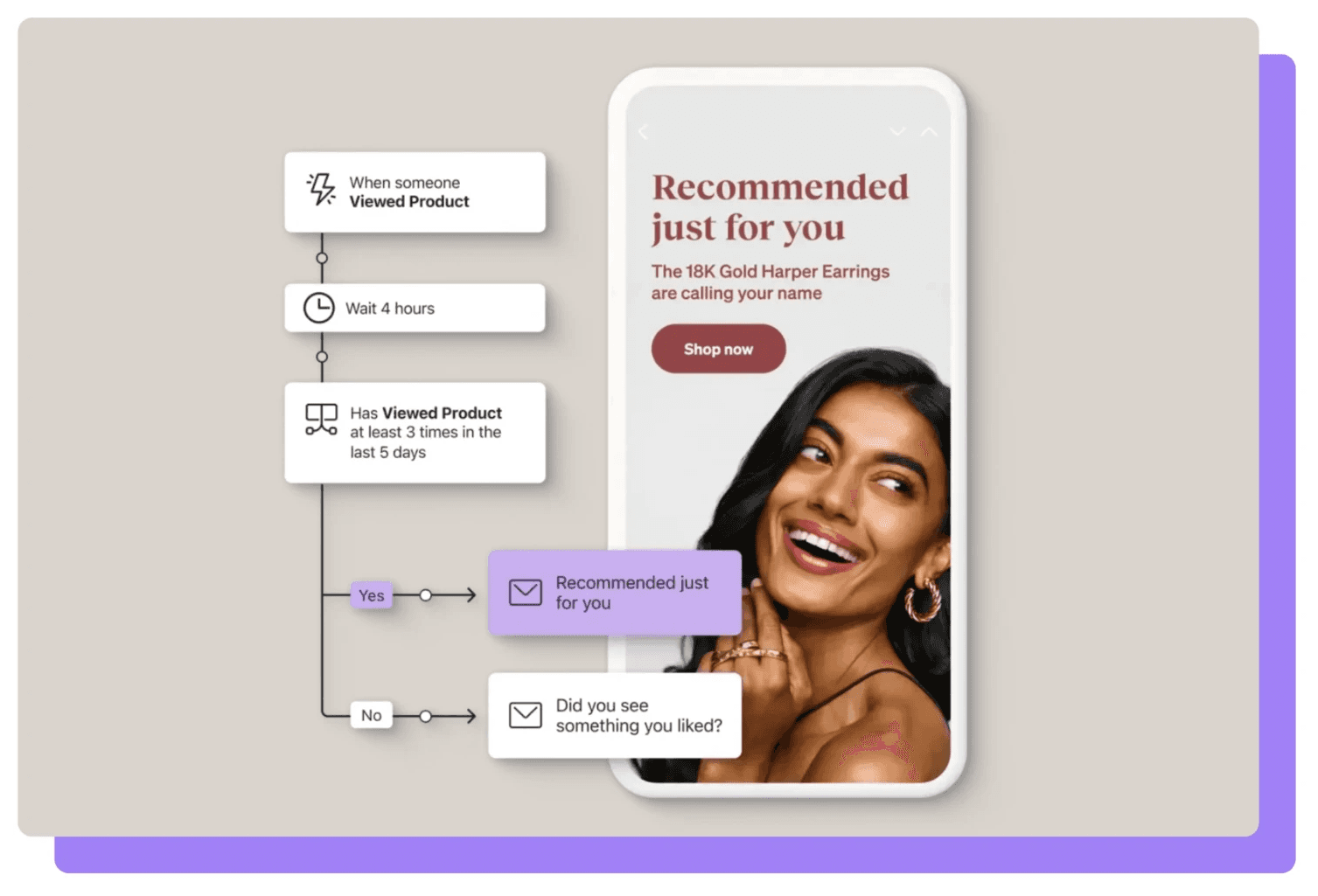
Trigger email flows based on actions in other platforms (new review submitted, loyalty tier achieved, subscription canceled)
Segment customers using data from multiple sources (high spenders who haven't left a review, VIP members whose subscription is about to renew)
Personalize emails with real-time data (current loyalty point balance, shipment tracking links, product recommendations based on quiz responses)
Ecommerce platform integrations
Shopify
If you run on Shopify, this is the first and most obvious integration to set up. The Klaviyo-Shopify connection syncs customer profiles, order history, product catalog, and cart abandonment data in real time.
Klaviyo automatically tracks 30+ Shopify events including purchases, refunds, checkouts started, and product views. You can use this data to build flows like abandoned cart recovery, post-purchase cross-sells, and win-back campaigns for dormant customers.
The integration also pulls product images, prices, and descriptions directly into your emails. No manual work required.
In March 2026, Klaviyo and Shopify announced deeper integration including Locale Aware Catalogs, which syncs translated content and regional pricing for cross-border stores. If you sell internationally, this handles localization automatically.
Best for: Any Shopify or Shopify Plus store using Klaviyo.
WooCommerce
WooCommerce is the second most common platform Klaviyo connects to. The integration works similarly to Shopify, pulling customer data, order history, and product information into Klaviyo.
You get automatic tracking for purchases, refunds, and abandoned carts. Product blocks in emails pull from your WooCommerce catalog. Customer lifetime value and predicted next order date sync to profiles for better segmentation.
Best for: WordPress stores running WooCommerce who want email automation tied to purchase behavior.
BigCommerce
BigCommerce merchants get the same core functionality: order syncing, customer profiles, product catalog integration, and behavioral tracking. The BigCommerce-Klaviyo integration supports both standard and headless storefronts.
Best for: BigCommerce stores looking for robust email marketing beyond native tools.
Form and data capture integrations
Typeform
Typeform creates interactive forms and surveys that live on landing pages or standalone URLs. The Klaviyo integration syncs form responses to customer profiles as custom properties.
Run a quiz to recommend products. Typeform captures answers and sends them to Klaviyo. Segment customers by quiz responses and personalize email recommendations.
The tradeoff: customers have to click out of the email to complete the form. Typeform doesn't embed inside emails, which adds friction.
Best for: Brands running product recommendation quizzes or customer surveys on landing pages who want results synced to Klaviyo.
Kinetic
Kinetic lets you embed interactive forms directly inside emails, removing the friction of clicking to a landing page. Customers can complete surveys, quizzes, feedback forms, or NPS questions without leaving their inbox.
The Klaviyo integration syncs responses to customer profiles in real time as custom properties. Trigger flows based on form submissions (someone completes a product quiz, responds to an NPS survey). Segment by response data (customers who prefer a specific product category, detractors with NPS scores below 7).
Interactive forms in email get 3x higher response rates than linking to external surveys because there's no click required. Kinetic works in Apple Mail, Gmail, Yahoo, and other major email clients with automatic fallback for unsupported inboxes.
Best for: Brands that want to collect customer data, run quizzes, or gather feedback without sending people to a landing page.
Review and UGC integrations
Judge.me
Judge.me has a tight Klaviyo integration in the reviews category. When a customer submits a review, that data syncs to their Klaviyo profile immediately. You can trigger review request emails through Klaviyo flows instead of Judge.me's native emails, giving you full control over timing, design, and segmentation.
The integration also syncs review ratings to customer profiles. This lets you segment by review behavior (customers who leave 5-star reviews vs. those who don't review at all) and personalize campaigns based on product ratings.
Judge.me is the budget-friendly option. The free plan supports unlimited review requests.
Best for: Brands wanting review collection without the cost of Yotpo or Stamped.
Yotpo
Yotpo is a full customer content platform covering reviews, loyalty, SMS, and subscriptions. The Klaviyo integration syncs review submissions, star ratings, photo and video reviews, and loyalty activity.
You can build flows triggered by review milestones (first review, 10th review) or target customers based on review sentiment. Yotpo also passes user-generated content into Klaviyo, so you can feature customer photos in email campaigns.
The downside? Yotpo is expensive. Pricing starts around $200/month for basic features and scales quickly for larger stores.
Best for: Mid-market and enterprise brands already invested in Yotpo who want unified customer data in Klaviyo.
Stamped.io
Stamped is priced between Judge.me and Yotpo, with functionality to match. The Klaviyo integration syncs reviews, ratings, and NPS responses. You can trigger post-purchase review requests via Klaviyo flows and segment customers by review activity.
Stamped also offers site reviews, checkout reviews, and Instagram shoppable galleries that feed into Klaviyo profiles.
Best for: Growing brands that need more features than Judge.me but don't want Yotpo's price tag.
Loyalty and rewards integrations
Smile.io
Smile.io is one of the most popular loyalty apps for Shopify. The Klaviyo integration handles everything: when customers earn points, reach a new VIP tier, or refer a friend, that activity syncs to Klaviyo.
Trigger emails when someone earns enough points for a reward. Remind dormant customers about unused points. Celebrate VIP tier upgrades. Smile passes current point balances to Klaviyo, so you can display dynamic point totals in emails.
Smile works on a freemium model. The free plan supports 200 monthly orders. Paid plans start at $49/month.
Best for: Shopify brands building a points-based loyalty program without developer resources.
LoyaltyLion
LoyaltyLion offers similar functionality to Smile with a few differences. The Klaviyo integration syncs loyalty activity, tier changes, and referral events. LoyaltyLion also tracks engagement metrics like loyalty page visits and reward redemptions.
The platform focuses more on data and analytics than Smile, which can help if you want detailed reporting on program performance.
Pricing starts higher than Smile (around $399/month) but includes more customization options.
Best for: Brands that want deeper loyalty analytics and are willing to pay for it.
Yotpo Loyalty
If you already use Yotpo for reviews, their loyalty program integrates natively with Klaviyo. The benefit is having review activity and loyalty activity in one system. A customer who leaves a review can earn points automatically, and both events sync to Klaviyo.
The combined integration lets you build flows like "earn bonus points for leaving your first review" or "VIP members who haven't reviewed yet."
Best for: Existing Yotpo customers who want to add loyalty without managing another vendor.
Subscription integrations
Recharge
Recharge is the dominant subscription platform on Shopify. The Klaviyo integration is mature and handles all subscription events. When a customer subscribes, skips a shipment, cancels, or updates their subscription, those events flow into Klaviyo.
Build flows for subscription churn (triggered when someone cancels). Run reactivation campaigns to win back former subscribers. Create upsells to encourage one-time buyers to subscribe.
Recharge also syncs subscription status, next charge date, and product preferences to customer profiles. This lets you segment active subscribers, those at risk of churn, or customers nearing their next renewal.
The integration requires setup through Recharge's dashboard and takes about 15 minutes. Once connected, all subscription events sync automatically.
Best for: Shopify stores offering subscription products (coffee, supplements, pet food, meal kits, etc.).
Skio
Skio is a newer subscription platform built specifically for Shopify. The Klaviyo integration syncs subscription events, customer status, and upcoming charge dates. Skio markets itself as easier to set up than Recharge with a better subscriber experience.
The Klaviyo connection works the same way. Trigger flows based on subscription actions. Segment by subscription status. Personalize emails with next shipment dates.
Best for: Shopify brands launching a new subscription program or switching from Recharge.
Shipping and fulfillment integrations
AfterShip
AfterShip tracks shipments from 1,100+ carriers and syncs tracking updates to Klaviyo. When an order ships, is in transit, out for delivery, or delivered, that status updates in the customer's profile.
Trigger transactional emails for each shipping milestone. AfterShip also detects delivery exceptions (delays, failed attempts, returns) and can trigger automated flows to keep customers informed.
The integration reduces "where is my order?" support tickets by proactively updating customers. AfterShip also includes branded tracking pages that match your store design.
Best for: Brands shipping high volumes who want to automate delivery communications and reduce support load.
ShipStation
ShipStation is a multi-carrier shipping platform that integrates with Klaviyo to sync order fulfillment events. When you print a shipping label in ShipStation, Klaviyo gets notified. You can then trigger a "your order has shipped" email with tracking details.
The integration is simpler than AfterShip (fewer granular tracking updates) but works well if you primarily need shipment confirmation emails.
Best for: Brands using ShipStation for order fulfillment who want basic shipment notifications via Klaviyo.
Marketing and advertising integrations
Meta Ads
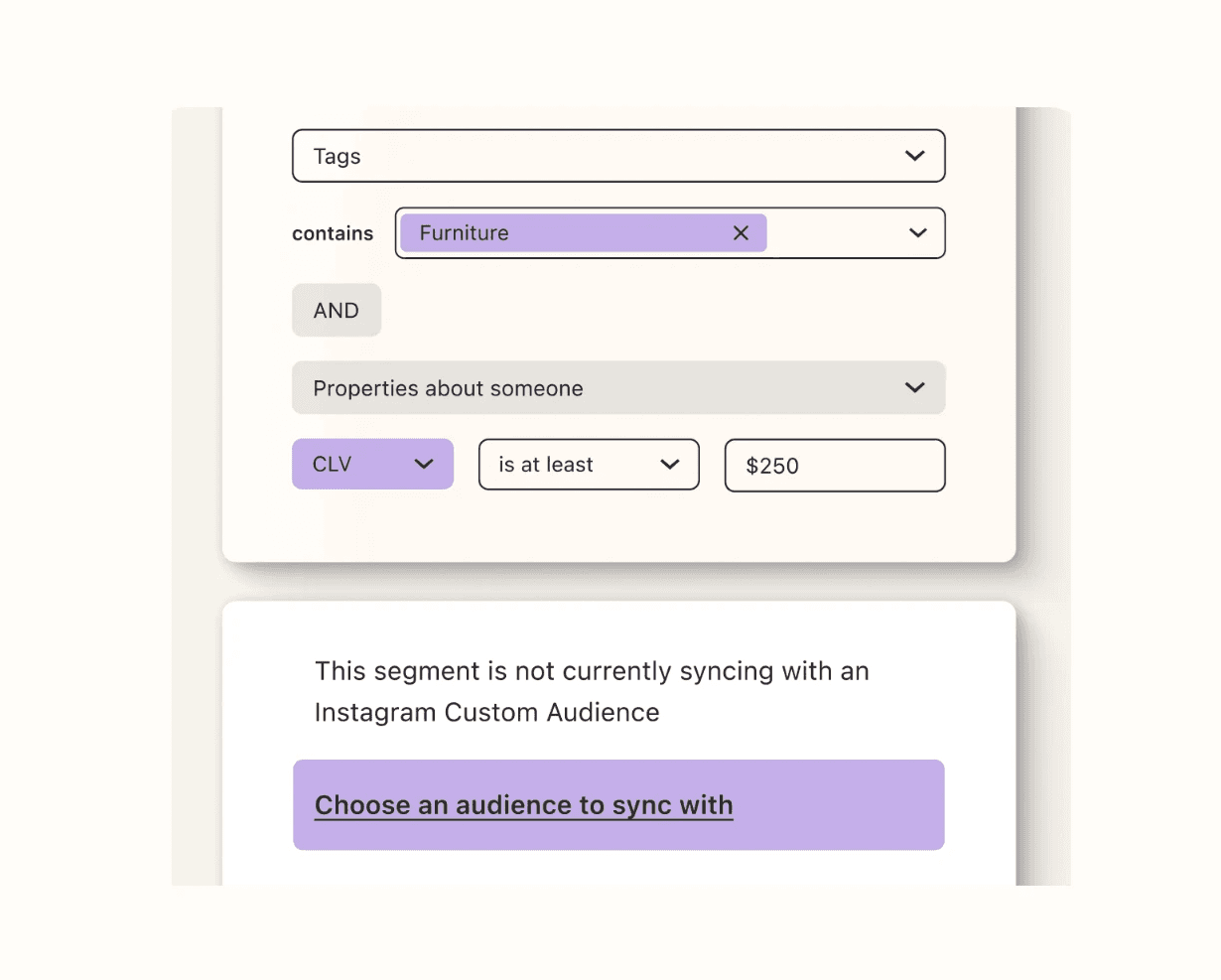
The Meta Ads integration syncs Klaviyo segments directly into Facebook and Instagram for retargeting campaigns. Create lookalike audiences based on high-value customers. Retarget email subscribers who haven't purchased yet. Exclude recent buyers from acquisition ads.
The integration updates audiences daily, so your ad targeting stays current with customer behavior in Klaviyo.
Best for: Brands running paid social who want to use email subscriber data for better ad targeting.
Google Ads
The Google Ads integration works like Meta: sync Klaviyo segments into Google Ads for Customer Match targeting. Retarget email subscribers on YouTube, Gmail, and Google Search. Build lookalike audiences for prospecting campaigns.
Google requires at least 1,000 matched users to activate an audience, so this works best for brands with larger lists.
Best for: Ecommerce brands running Google Ads who want to layer email data into their targeting strategy.
Data and analytics integrations
Triple Whale
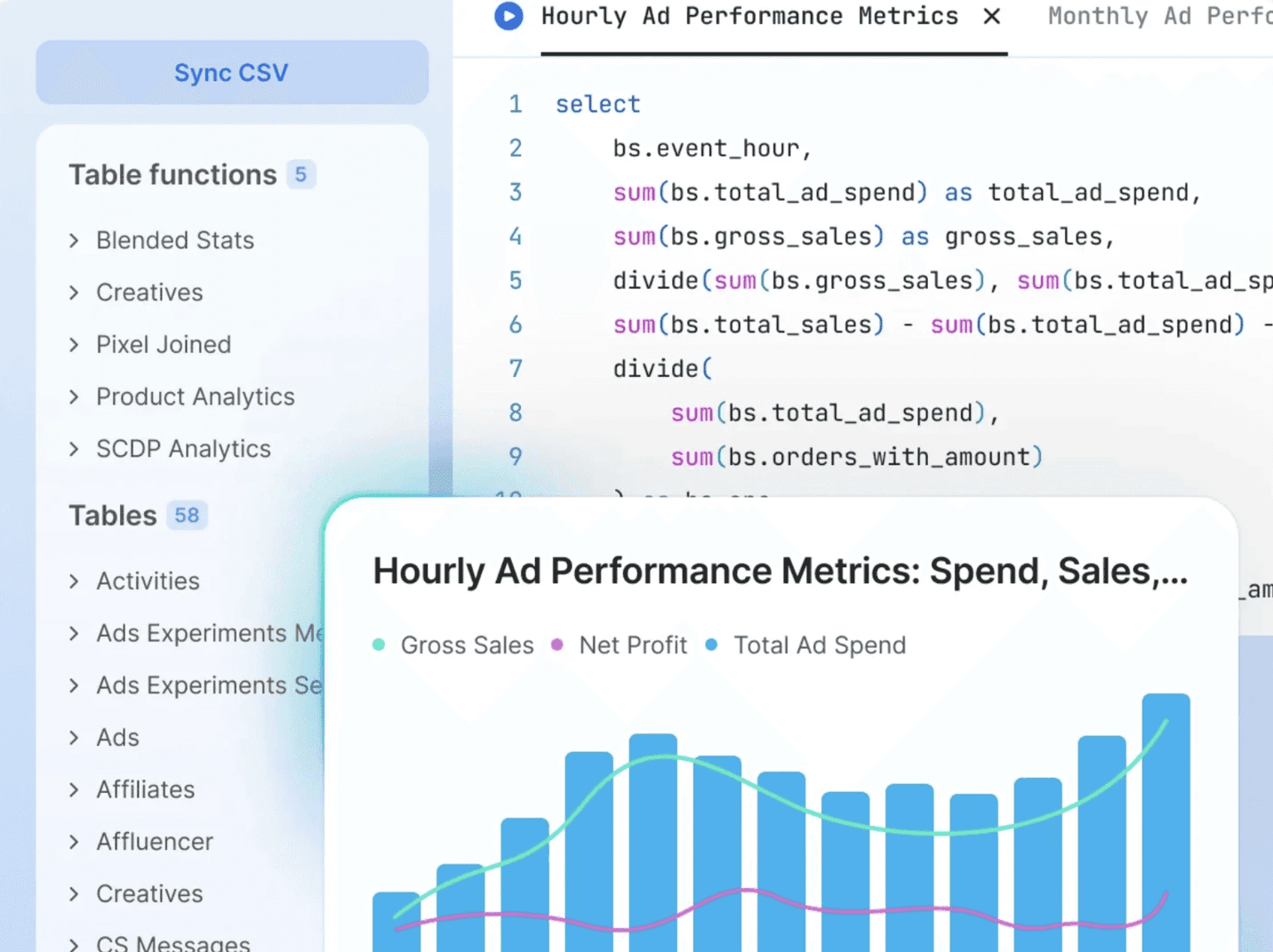
Triple Whale is an attribution and analytics platform that consolidates data from Shopify, Meta Ads, Google Ads, Klaviyo, and other sources into one dashboard. The Klaviyo integration syncs email revenue, campaign performance, and flow metrics.
Triple Whale helps you see which email flows drive the most revenue, how email attribution stacks up against paid channels, and which segments convert best. The platform also offers AI-powered insights and predictive analytics.
Best for: Brands spending heavily on paid acquisition who want unified reporting across all channels including email.
Zapier
Zapier connects Klaviyo to thousands of apps that don't have native integrations. Build workflows ("Zaps") that trigger actions in Klaviyo based on events in other tools.
Examples:
Someone fills out a Typeform quiz → add them to a specific Klaviyo segment
Customer leaves a review on Trustpilot → tag them in Klaviyo
Support ticket closes in Zendesk → update a custom property in Klaviyo
Zapier requires a paid plan to use premium apps like Klaviyo. Plans start at $29/month.
Best for: Brands needing custom integrations between Klaviyo and niche tools.
How to choose the right Klaviyo integrations
Not every integration makes sense for every brand. Here's how to decide:
1. Start with your platform
Connect your ecommerce platform first (Shopify, WooCommerce, BigCommerce). This gives you the foundational customer and order data to run basic flows like abandoned cart and post-purchase sequences.
2. Add based on your business model
Subscription brands need Recharge or Skio. Physical product brands benefit from AfterShip or ShipStation. If you rely on reviews for social proof, start with Judge.me, Yotpo, or Stamped.
3. Layer in retention tools
Loyalty programs (Smile, LoyaltyLion) work best for brands with repeat purchase models. Collect reviews from first-time buyers, then use loyalty to drive second and third purchases.
4. Fill gaps in your customer journey
If you struggle to collect customer preferences or zero-party data, add a form tool like Typeform or Kinetic. If you want tighter attribution, add Triple Whale.
5. Don't over-integrate
More integrations mean more data. Also more complexity. Start with 3-5 core integrations that solve specific problems. Add others only when you have clear use cases.
How Klaviyo integrations work technically
Klaviyo integrations use APIs (application programming interfaces) to sync data between systems. When an event happens in one platform, the API sends that information to Klaviyo and updates the customer profile.
Most integrations sync bidirectionally. Klaviyo can push data to the other platform (send a list to Meta Ads) and pull data in (receive shipment tracking updates from AfterShip).
Data syncs happen in real time or near real time, usually within 1-5 minutes of an event occurring. Some integrations batch updates every few hours instead of syncing instantly.
You don't need developer resources to set up most Klaviyo integrations. The marketplace includes one-click installs for popular apps. More complex integrations (custom APIs, Zapier workflows) may require technical setup.
Common mistakes with Klaviyo integrations
Integrating without a plan
Don't connect tools just because they're available. Map out which customer data you need and how you'll use it in Klaviyo before adding integrations.
Duplicate tracking events
If you integrate both your ecommerce platform and Google Analytics, you might track the same purchase twice. Check your event tracking setup to avoid inflated metrics.
Ignoring data hygiene
More integrations mean more data fields on customer profiles. Clean up unused properties, archive outdated segments, and document what each custom property represents.
Not testing flows before launch
When you add a new integration, test any flows that use the new data. Make sure events trigger correctly and data displays as expected in emails.
Conclusion
The right Klaviyo integrations turn your email platform into a customer data hub. Connect your ecommerce platform, reviews, loyalty program, and shipping tracker. You unlock smarter segmentation and higher-converting flows.
Start with your core platform integration. Layer in tools based on your business model. Subscription brands need Recharge or Skio. Brands focused on retention should add loyalty and reviews. If you want to collect more customer data, consider interactive email forms with Kinetic.
Most integrations take under 30 minutes to set up. They pay for themselves through better email performance. Pick 3-5 that solve real problems. Test your flows. Iterate based on results.
FAQs
authorize data sharing, and the integration syncs automatically. Popular integrations like Shopify, Smile.io, Recharge, and AfterShip require no coding. Custom integrations through Zapier or proprietary APIs may need technical setup. Pre-built integrations work out of the box.
How do subscription integrations like Recharge work with Klaviyo?
Connect Recharge (or Skio) to Klaviyo and subscription events sync to customer profiles automatically. Subscription started, canceled, skipped, paused, or reactivated. Trigger email flows based on these events (win-back campaigns for cancellations, reminder emails before renewals). Segment by subscription status. Recharge also syncs next charge dates and product preferences for personalization.
Can I use Klaviyo with platforms other than Shopify?
Yes. Klaviyo integrates with WooCommerce, BigCommerce, Magento, Salesforce Commerce Cloud, Wix, Square Online, PrestaShop, and many others. The functionality is similar across platforms: sync customer data, order history, and product catalogs into Klaviyo for email automation. Shopify has the most mature integration. Other platforms work well too.