
Klaviyo Segmentation: How to Personalize Beyond "Hi {First Name}"

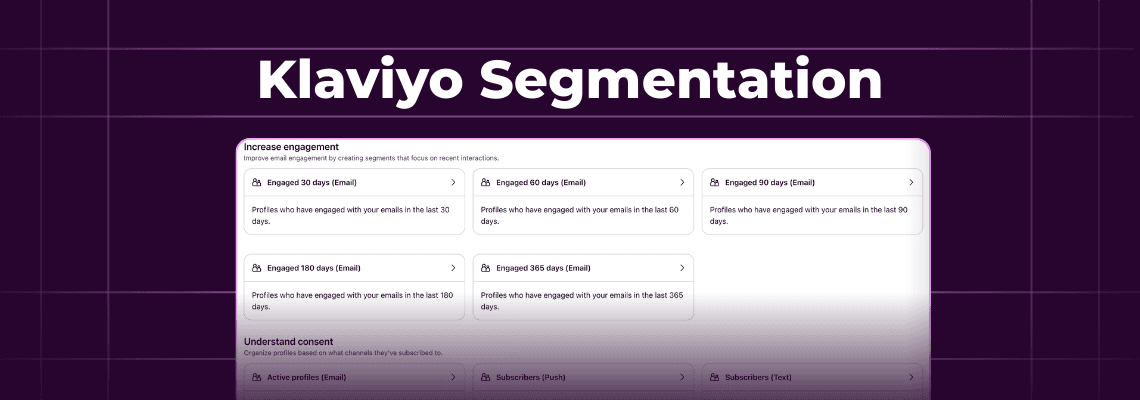
Open your Klaviyo account. Go to Lists & Segments. Count how many segments you have that aren't some version of "engaged in the last 30 days."
If the answer is less than three, you're in the majority. And your Klaviyo segmentation strategy is leaving real revenue on the table.
Klaviyo's own benchmark data shows that highly segmented email lists generate 3x more revenue per recipient than unsegmented ones. Most brands think they're segmented because they split engaged from unengaged subscribers. That's the bare minimum, and if you’re in this group then I have some good news for you: there is a lot of room to grow!
Real Klaviyo segmentation goes deeper. It combines what subscribers do (opens, clicks, purchases) with what they tell you they want (preferences, product interests, lifestyle details). This post covers where most brands hit a wall, what data you're probably missing, and how to collect it without adding friction to your funnel.
Inside this page
Share this
Summarize with AI
Key Takeaways
Segmented Klaviyo campaigns earn 3x more revenue per recipient than unsegmented sends ($0.19 vs. $0.06), but most brands only segment by engagement metrics like "opened in 30 days"
Behavioral data tells you who's paying attention but not what they want. Zero-party data (stated preferences, quiz answers, survey responses) fills that gap.
Three ways to collect preference data for Klaviyo: on-site forms (low reach for existing subscribers), linked surveys (high friction from redirects), and in-email forms (lowest friction, highest response rates)
The highest-value segments combine both data types: "purchased twice AND prefers running shoes" beats either signal alone
Start with one question, one segment, one targeted campaign. Measure the lift and build from there. Every brand is unique and you will need to find what works best for you.
What Klaviyo Segmentation Are Most Brands Actually Using?
Most ecommerce brands running Klaviyo have somewhere between 3 and 8 segments. Almost all of them are built on engagement metrics: opened or clicked in the last 30/60/90 days, purchased in the last X months, and maybe a VIP tier based on total spend.
Don’t get me wrong, these segments definitely matter. Engagement-based Klaviyo segmentation keeps your deliverability healthy and stops you from emailing people who don't want to hear from you. Klaviyo's own data backs this up: segmented campaigns earn $0.19 per recipient versus $0.06 for unsegmented sends, based on an analysis of 2.6 billion emails. That's a 3x revenue difference.
But there's a glass ceiling to this strategy.
Engagement-only segments tell you who's paying attention. They don't tell you what those people actually want. An "engaged 30-day" segment might contain a first-time buyer looking for running shoes, a repeat customer who only shops sales and likes hats, and someone who clicked once because they liked the subject line. You'd send all three the same email.
That's not true Klaviyo personalization. That's a mailing list with a glorified filter.
Why Does Klaviyo Segmentation Hit a Wall?
Klaviyo segments stall because they're built on behavioral data alone. Behavioral data tracks what subscribers do: what emails they open, what links they click, what products they buy, how often they visit your site. Klaviyo tracks all of this well. That's the whole point of the platform.
But behavior only tells you one side of the story. It shows you the what without the why.
Behavioral Data vs. Zero-Party Data
Behavioral data says "this customer bought a moisturizer last month." Zero-party data says "this customer has oily skin, prefers fragrance-free products, and cares about ingredients."
One lets you send a replenishment reminder. The other lets you recommend the right next product before they go looking.
McKinsey's personalization research found that companies excelling at personalization generate 40% more revenue from those activities than average performers. And 71% of consumers now expect personalized interactions. 76% get frustrated when brands miss the mark.
You can read more about zero-party data in our article here.
The Data Gap
Here's what's actually happening for most Klaviyo users. Klaviyo is great at tracking behavior. Really great. But it has zero preference data on your subscribers unless you collect it yourself and feed it into custom profile properties.
That's the gap. Your Klaviyo segmentation is only as good as the data behind it. Most brands have rich behavioral data and almost no stated-preference data.
So how do you fill that gap?
How Do You Collect the Data Klaviyo Can't Track on Its Own?
There are three methods for collecting zero-party data from your subscribers and syncing it to Klaviyo profile properties. Each works, but have different tradeoffs in terms of friction and response rate.
On-Site Forms and Pop-Ups
Klaviyo's native forms work well for collecting data at the point of acquisition. You can ask one or two preference questions in a signup popup or welcome form. Good for new subscribers.
The limitation: your existing subscribers have already signed up and subscribers coming in through other funnels will never see this popup. Chances are they will never head back to your website and fill out your popup form. Omnisend's 2025 data across 1.24 billion popup displays shows on-site forms convert at about 2.1%. Fine for acquisition, but it won't help you enrich the vast majority of your list who subscribed months ago.
Post-Purchase and Flow Surveys (Linked Out)
The second approach: link to a survey tool like Typeform or SurveyMonkey from your post-purchase flows. Typeform reports a 47% average completion rate across all their forms. That sounds great until you factor in the click-through rate from the email itself.
You need subscribers to open the email, click the link, wait for the page to load, then complete the form. Each step loses people. A peer-reviewed study in Survey Practice found that standard link-out surveys from email get a 24.4% completion rate versus 29.1% when the first question is embedded directly in the email. One thing to note here is that this doesn’t take into account the click-rate from email > form, which tend to be quite low.
The redirect is the biggest friction point. And for most ecommerce brands, the survey tool you're linking to wasn't designed for the email channel.
In-Email Surveys and Quizzes
The third approach removes the redirect entirely. You embed the form directly inside the email so subscribers answer without leaving their inbox.
Tools like Kinetic let you drag and drop interactive forms, product quizzes, and multi-step surveys right into your Klaviyo templates. Subscribers tap their answers in the email. Their responses sync automatically to Klaviyo profile properties, which means you can build segments from that data immediately.
No landing page. No extra click. Responses flow straight to the subscriber's profile.
What Segments Should You Build With Zero-Party Data?
Once you're collecting preference data into Klaviyo profile properties, you can build segments that behavioral data alone can't touch. Here are four categories worth starting with.
Preference Segments
These are built on what customers tell you they care about. Examples:
Skin type (oily, dry, combination) for a skincare brand
Preferred category (running, training, lifestyle) for an athletic brand
Dietary needs (vegan, keto, gluten-free) for a food brand
Budget (sale shopper vs. full-price buyer, personal price range)
Each of these becomes a Klaviyo custom property. "DietType = Keto, Gluten-free" creates a segment you can target with product recommendations that a behavioral segment might completely miss. This same customer might have purchased a vegan product in the past, but not be a on a strict vegan diet. Now you are able to target them with keto and gluten-free specific updates, and can confidently remove them from any “vegan only” segments based solely on behavioral data.
Lifestyle and Identity Segments
These go beyond product preferences into who the customer is:
Shopping for self vs. gifting for someone else
Fitness level or experience (beginner, intermediate, advanced)
Life stage (new parent, college student, retiree)
A pet food brand asking "How old is your dog?" isn't being nosy. They're building a segment that powers a completely different email sequence for puppy owners versus senior dog owners.
Purchase Intent Segments
Ask customers where they are in the buying journey:
Just browsing (send educational content)
Comparing options (send comparison guides)
Ready to buy (send offers and social proof)
This is data Klaviyo can't infer from behavior alone. Someone who visited a product page three times might be ready to buy. They also might be comparing prices across five brands. Asking removes the guesswork.
Combined Behavioral + Zero-Party Segments
The real payoff comes from layering both data types on top of each other.
"Purchased twice AND prefers running shoes" is a very different segment than "purchased twice." The first one gets a targeted email about your new trail runners. The second gets a generic product roundup.
"VIP by spend AND shops mainly for gifts" means your holiday campaign should feature gift guides and wrapping options, not loyalty perks and advanced product deep dives.
For more on what zero-party data looks like in practice, check out our complete zero-party data guide.
How Do You Turn Segments Into Personalized Emails?
Good segments mean nothing if you send the same content to all of them. Here's how to actually put them to work in Klaviyo.
Targeted Campaign Sends
The simplest approach: send different campaigns to different segments. Your skincare segment for oily skin gets an email featuring mattifying products. Your dry skin segment gets hydrating picks. Same slot on your calendar, completely different content.
Conditional Content Blocks
For more efficiency, use Klaviyo's conditional content blocks within a single email. One template, but the hero image and product grid swap based on the recipient's profile properties.
A subscriber with "PreferredCategory = Running" sees running shoes in the product block. "PreferredCategory = Training" sees training gear. Same send, different experience.
Flow Branching
Use zero-party data to branch your automated flows. A post-purchase flow that asks "Who did you buy this for?" can split into two paths: self-purchasers get replenishment reminders and cross-sells, while gift-buyers get "need another gift?" sequences around holidays.
Putting It Together
Klaviyo segmentation hits a ceiling when you only use behavioral data. Engagement segments and purchase history are the foundation. Zero-party data is what takes you higher.
The brands that break through are the ones asking their subscribers what they want, collecting those answers into profile properties, and building segments that combine behavior with stated preferences.
You don't need to do all of this at once. Pick one question that would change how you email your list. Ask it. Build one segment from the answers. Send one campaign targeting that segment. Measure the difference.
If you want to collect that data without sending subscribers to a landing page, Kinetic lets you embed the question directly in your Klaviyo emails.
FAQs
What is the difference between a list and a segment in Klaviyo?
A list is a static group of subscribers added manually, via a form, or through an import. A segment is dynamic: it updates automatically based on conditions you define. When a subscriber meets the criteria, they enter the segment. When they stop meeting it, they leave. For most email campaigns, segments are more useful because they stay current without manual work. Use lists for things like event attendees or imported contacts; use segments for targeting active campaigns.
How do I segment by more than just email engagement in Klaviyo?
Klaviyo lets you segment using any profile property, not just engagement metrics. The key is getting data into those properties first. You can collect it through on-site signup forms, post-purchase surveys, or in-email interactive forms that sync responses directly to subscriber profiles. Once a custom property like "SkinType" or "PreferredCategory" exists on a profile, you build segments around it the same way you would with engagement conditions.
What is zero-party data and how does it improve Klaviyo segmentation?
Zero-party data is information a customer intentionally shares with you: preferences, quiz answers, survey responses, product interests. Unlike behavioral data (which Klaviyo collects automatically from opens, clicks, and purchases), zero-party data tells you what customers want, not just what they've done. This lets you build Klaviyo segments based on stated preferences, which power more relevant product recommendations, content, and offers.
How many segments should an ecommerce brand have in Klaviyo?
There's no magic number. What matters is having segments that change what you send. A good starting point for most DTC brands: 3-5 engagement segments (for deliverability), 2-3 purchase behavior segments (for lifecycle flows), and 2-4 preference segments (for Klaviyo personalization). The test is simple: if two segments would receive the exact same email, they should probably be one segment. Build segments that drive different content, not segments for the sake of it.